There are many types of accumulators, among which the commonly seen ones include bladder type, diaphragm type and piston type. Different types differ in structure, performance and applicable scenarios. Many people are confused about how to make the right selection during model choosing. Blind selection will not only fail to give full play to the function of the accumulator, but also increase costs and cause faults. Today we classify and analyze each type, to help you select the suitable accumulator according to your actual working conditions.
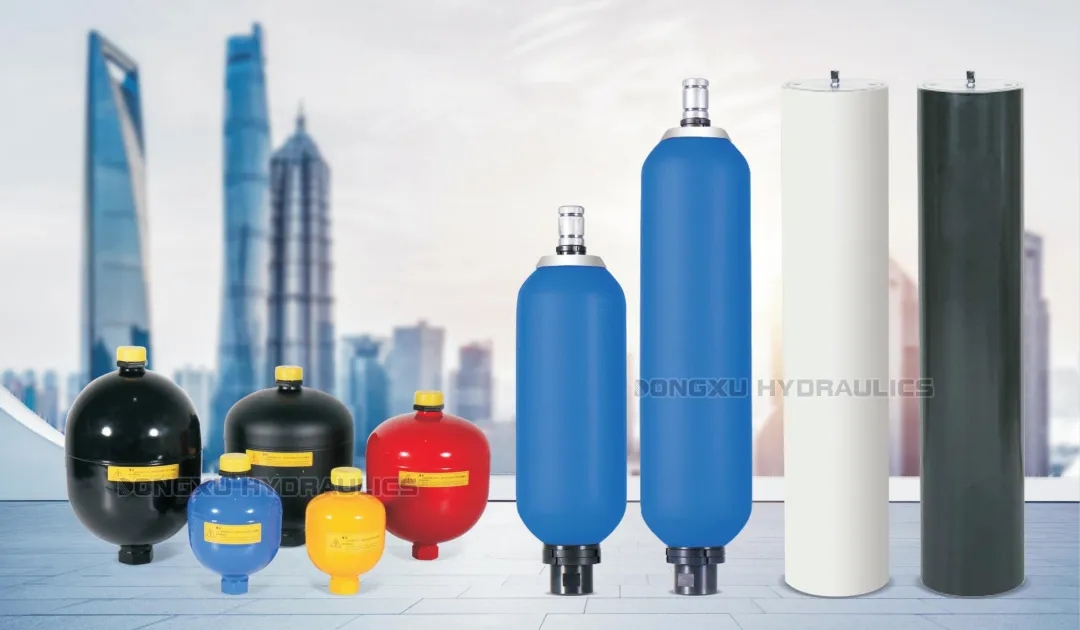
I. Bladder Accumulator: The First Choice for Low-pressure and High-frequency Energy Storage
Structural Characteristics
The core component is the bladder, which divides the interior of the accumulator into an air chamber and an oil chamber. After inflation, the bladder expands to store hydraulic energy; when releasing energy, the bladder contracts to squeeze out hydraulic oil.
It features simple structure, small size, light weight and excellent sealing performance. It can effectively isolate gas from hydraulic oil and prevent gas from dissolving into the oil.
Core Advantages
It delivers fast response speed, making it suitable for energy storage demands with high frequency and small flow. Compact and lightweight, it allows flexible installation and is ideal for small-sized equipment and mobile hydraulic devices.
With reliable isolation between gas and oil, it offers quick response, good tightness, low leakage and minor gas loss, resulting in low maintenance cost.
Applicable Scenarios
Low-pressure hydraulic systems (rated pressure generally ranging from 10 to 31.5 MPa) and high-frequency energy storage occasions, such as machine tools, injection molding machines, small cranes, hydraulic elevators, etc.
It is suitable for working conditions requiring fast response and limited installation space.
Notes
It is not resistant to high pressure and impact, and cannot be used in working conditions with high pressure and large flow. The bladder is prone to aging and requires regular inspection and replacement.
It is not applicable to hydraulic media with particulate impurities; otherwise, the bladder will be damaged.
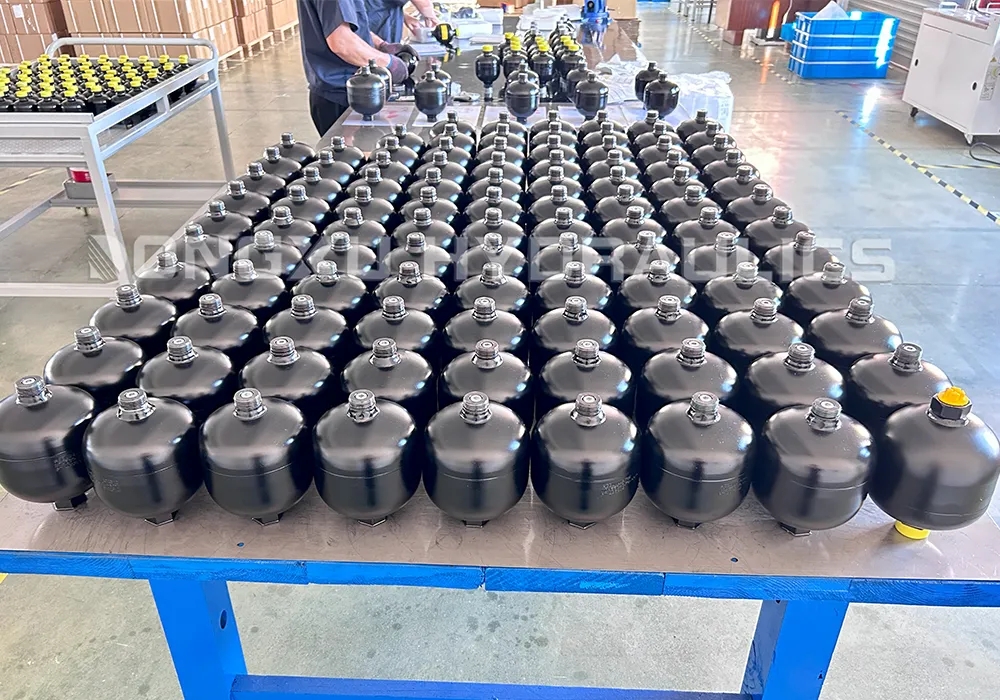
II. Diaphragm Accumulator: First Choice for Precision and High-pressure Applications
Structural Characteristics
The core component is the diaphragm, which divides the inside of the accumulator into an air chamber and an oil chamber. Made of corrosion-resistant and high-temperature resistant materials, the diaphragm features excellent sealing performance and can completely isolate gas from hydraulic oil.It has a compact structure, fast response speed and high precision.
Core Advantages
It delivers fast response and high precision, making it suitable for precision hydraulic systems.It features high pressure resistance with a rated pressure up to 330 bar, superior tightness, zero leakage and extremely low gas loss.With small size, compact structure and light weight, it is ideal for precision equipment with limited installation space.
Applicable Scenarios
Precision hydraulic systems and high-pressure working scenarios, such as aerospace equipment, precision machine tools, hydraulic test equipment, etc.It is applicable to working conditions with high requirements for energy storage accuracy and sealing performance.
Notes
It has a relatively small capacity and is not suitable for high-flow energy storage demands.The diaphragm is vulnerable to damage and cannot withstand severe impact.It has a relatively high maintenance cost, and diaphragm replacement is difficult.

 GearboxesAgriculture/Products8
 GearboxesAgriculture/Products8