In the production process of industrial equipment, the stable operation of oil coolers is crucial to the smooth running of the entire production line. Most oil cooler faults are rooted in the seemingly simple installation process. Many operators regard oil cooler installation as nothing more than simple pipeline connection, wiring and power-on, while ignoring the technical logic behind each parameter and every operational step.
Any negligence in installation and maintenance details will not only cause frequent alarms and a sharp reduction in the service life of the oil cooler, but may also lead to failures of the main unit, resulting in unplanned shutdowns and unnecessary economic losses.
This article breaks down the eight core technical points of oil cooler installation, clarifies operational standards and explains the underlying principles in depth. An operation note column is also reserved for on-site construction records, helping practitioners eliminate hidden installation hazards from the source and ensure the long-term stable operation of oil coolers.
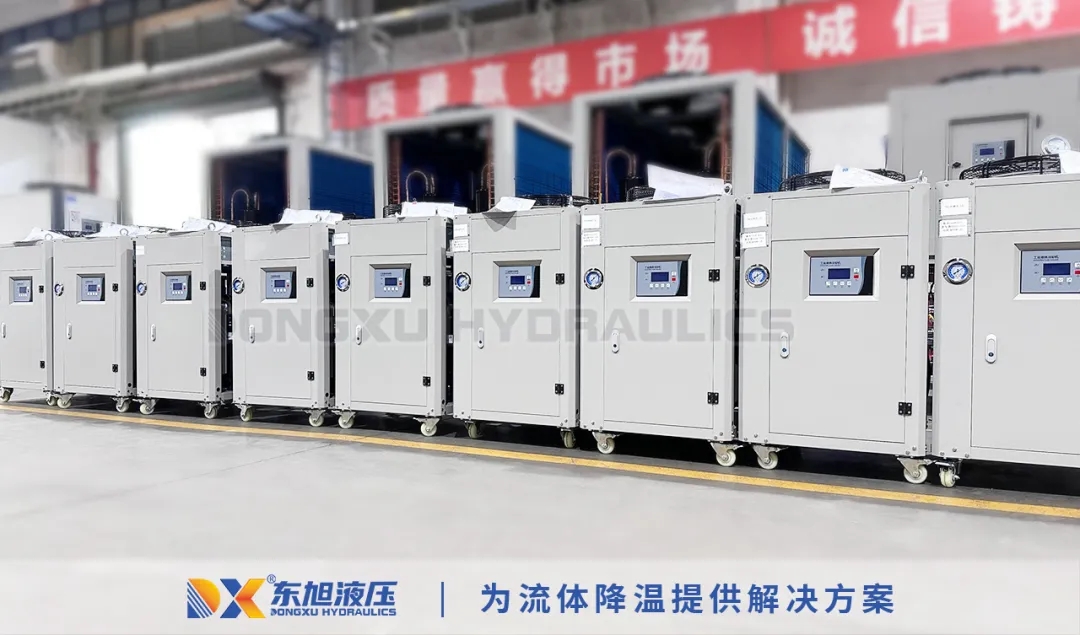
1. Power Supply and Wiring:Minor detail errors may lead to complete electrical damage
Core Requirements
Verify the power standard; the voltage and frequency shall be completely consistent with the equipment specification.
Connect the external control switch and alarm output interface in accordance with the wiring diagram specifications.
Operation Details
The alarm output and remote control adopt passive normally open contacts, which can be directly linked with the main machine without additional adapter components.
Fault Avoidance
Prevent wrong connection and virtual connection that cause burnout of electrical components.
Avoid linkage failure caused by poor interface contact.
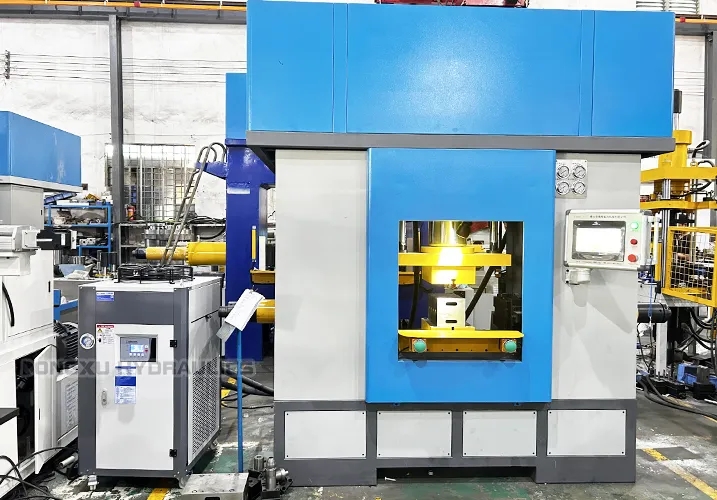
II. Pipeline Layout: Three essential elements — caliber, pressure resistance and flow resistance — are all indispensable.
Core Requirements
The nominal diameter of external oil pipes and fittings shall be no less than the diameter of the oil cooler inlet and outlet ports; reducing the diameter is strictly prohibited.
The pressure resistance of oil pipes and fittings shall be no less than 1.6MPa.
The overall pipeline flow resistance shall be no more than 0.3MPa, and the number of elbows shall be minimized.
Operation Details
Select elbows with large curvature radius.
Conduct proper sealing treatment at pipeline joints to eliminate oil leakage risks.
Fault Avoidance
Prevent increased flow resistance from reducing heat exchange efficiency.
Avoid pipe burst and flow attenuation caused by local pressure concentration.
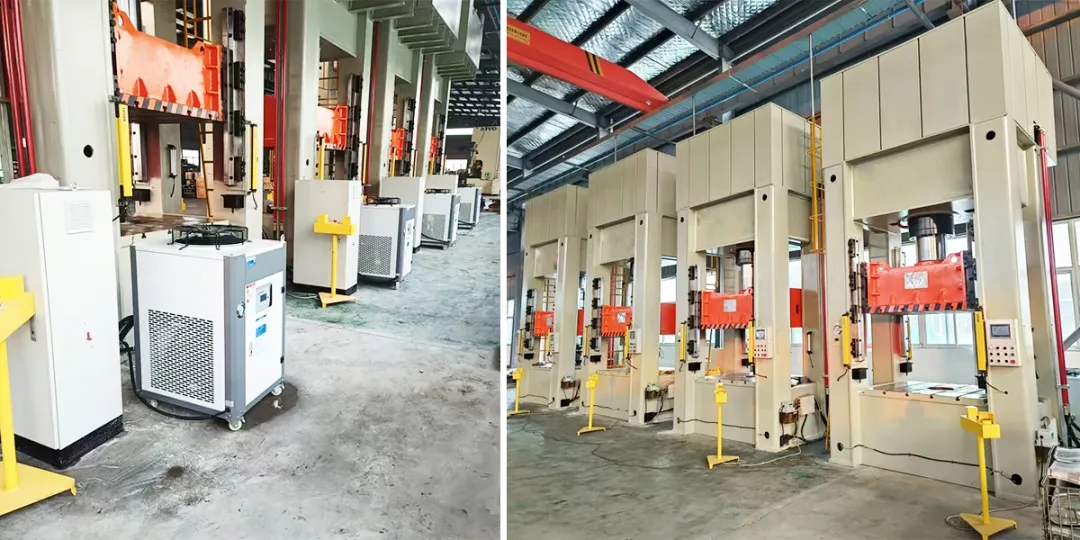
III. Oil Suction System: Precisely Control Distance, Height and Vacuum Degree to Prevent Oil Pump Wear
Core Requirements
The length of the oil suction pipe shall be ≤ 4 meters, and the vertical suction height shall be less than 1 meter.
The vacuum degree at the oil inlet shall be kept within 0.03MPa.
For long-distance installation, arrange the external oil pump close to the oil tank.
Operation Details
Adopt rigid and wrinkle-free pipes for the oil suction pipeline.
Ensure tight sealing at all joints to prevent air intake.
Fault Avoidance
Avoid insufficient oil suction and idling wear of the oil pump.
Prevent oil pump failure caused by abnormal vacuum degree and extend the service life of the oil pump.
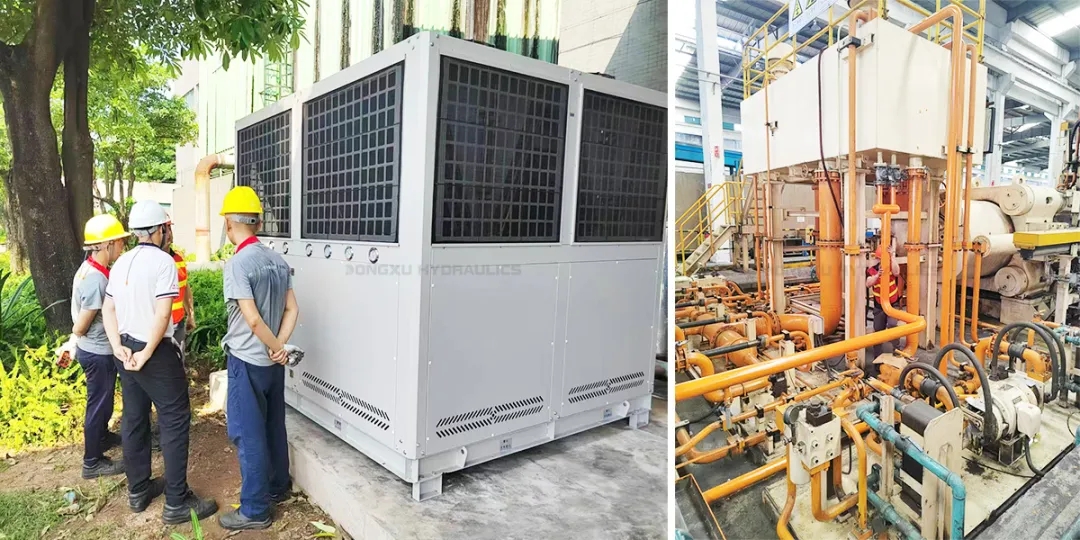
IV. Filtration and Impurity Control: Small Filters Build the First Line of Defense Against Faults
Core Requirements
A 50~100 mesh steel wire filter must be installed at the oil suction port.
Clean the filter regularly to ensure unobstructed oil flow.
Operation Details
Install the filter close to the oil suction port for easy disassembly and maintenance.
The cleaning cycle is 7 to 15 days, adjustable according to the on-site cleanliness of hydraulic oil.
Fault Avoidance
Trap impurities and filamentous substances larger than 50 microns to prevent scratching of the oil pump inner wall and spool blockage.
Avoid abnormal oil suction pressure caused by filter clogging.
V. Environment and High-temperature Adaptation: Choose the Right Installation Environment to Cut Half of Equipment Faults
Core Requirements
The installation area shall be well ventilated, kept away from dust and corrosive aerosol. Direct sunlight, rain exposure, thermal radiation and external vibration are strictly prohibited.
Improve the safety factor when the ambient temperature is higher than 35℃.
Contact the manufacturer to customize a special model when the ambient temperature exceeds 43℃.
Operation Details
Install additional cooling fans or set up a sunshade and heat insulation cover in high-temperature environments.
Mount shock-absorbing pads at the bottom of the equipment in vibration-prone areas.
Fault Avoidance
Prevent the equipment from operating under overload.Avoid accelerated component aging and reduced heat exchange efficiency caused by harsh external environments.
VI. Heat Exchange Medium and Oil Grade: Choose Dedicated Oil to Reduce Equipment Failures
Core Requirements
It is strictly prohibited to use water, water-soluble, flammable or corrosive liquids as the heat exchange medium.Only special oil of Grade 5# ~ 46# is supported.If an out-of-range oil grade is required, inform the manufacturer in advance for targeted adjustment.
Operation Details
Check the oil grade before refilling; no mixing and no contamination are allowed.
Fill oil to the equipment calibrated liquid level, avoiding oil shortage or overflow.
Fault Avoidance
Prevent seal aging and pipeline corrosion caused by incompatible medium.
Avoid reduced heat exchange efficiency due to mismatched oil grade.
VII. Fixing and Vibration Isolation: Detailed Protection to Extend the Overall Service Life of Equipment
Core Requirements
External oil pipes shall be fixed with independent supports. It is strictly forbidden to let the weight of the oil pipes bear down on the inlet and outlet ports of the oil cooler.Use hose connections for oil inlet and outlet to buffer external vibration.
Operation Details
Keep the support spacing at 1~1.5 meters and fix them firmly.
Select oil-resistant and pressure-resistant hoses with proper length, without excessive stretching or bending.
Fault Avoidance
Prevent oil leakage caused by long-term stress on pipe ports.
Avoid external vibration being transmitted to the interior, which may damage core components such as the pump body and heat exchanger.
VIII. Absolute Installation Prohibitions:
Core Requirements
It is strictly forbidden to use water, water-soluble, flammable or corrosive liquids as heat exchange media.Only dedicated oil with specifications of 5# ~ 46# is applicable.If oil grade beyond the specified range is required, inform the manufacturer in advance for targeted technical adjustment.
Operation Details
Check the oil grade before refilling; prohibit mixed filling and contaminated oil.
Fill the oil to the rated liquid level of the equipment, neither underfilling nor overfilling.
Fault Prevention
Avoid seal aging and pipeline corrosion caused by incompatible heat exchange media.
Prevent reduction of heat exchange efficiency due to mismatched oil grade.

 GearboxesAgriculture/Products8
 GearboxesAgriculture/Products8