In hydraulic systems, accumulators function like “energy power banks.” They store pressurized oil, cushion impacts, compensate for leaks, and stabilize pressure—making them critical components for ensuring efficient system operation. Among the various accumulator types, bladder and diaphragm accumulators are popular industrial choices due to their compact design and versatility. Yet many engineers remain confused during selection: What exactly distinguishes these two types? How can you avoid pitfalls when choosing? Today, we'll cover everything from principles and performance to application scenarios—all in one go!
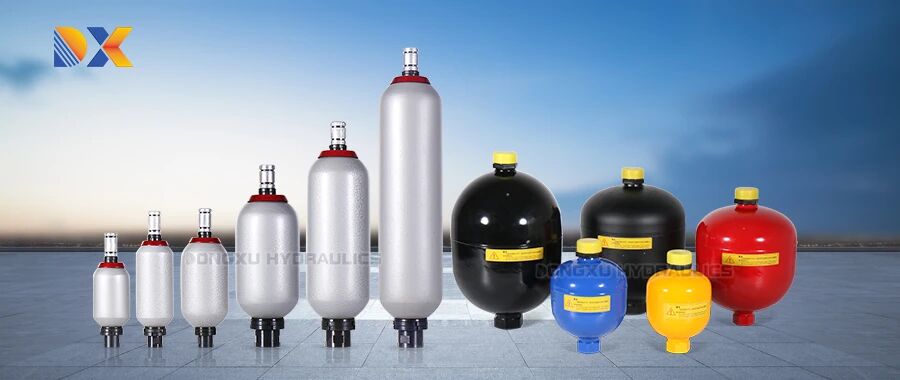
I. First Understand the Fundamentals: The “Core Structural” Differences Between Two Types of Accumulators
Bladder-Type Accumulators
Bladder-Type Accumulators: (as shown in Figure 1-1) Typically composed of a flexible rubber bladder capable of containing gas. Since liquids are incompressible, the accumulator utilizes the compressibility of gas to store fluid. When pressure increases, oil enters the accumulator, compressing the gas. When pressure decreases, the compressed gas expands, forcing oil back into the circuit.

Diaphragm-type accumulator: (as shown in Figure 1-2) A diaphragm-type accumulator uses a partitioning diaphragm (isolation membrane) to separate a liquid or gas into two distinct regions. One region is filled with a compressed medium (such as nitrogen), while the other region contains the liquid or gas to be stored. The diaphragm serves as an isolation barrier between these two regions.

 GearboxesAgriculture/Products8
 GearboxesAgriculture/Products8